Hareton Earnshaw and Catherine Linton's romance
Wuthering HeightsThe romance between Hareton Earnshaw and Catherine Linton is the novel's redemptive counterpoint to the destructive passions of the first generation, tracing a slow, hard-won movement from mutual contempt and misunderstanding to genuine love and union. Their relationship, which culminates in their marriage on New Year's Day, represents the healing of the Earnshaw and Linton lines and the restoration of Wuthering Heights to its rightful heir, offering the only hopeful resolution in a story otherwise defined by revenge and loss.
First Encounters and Initial Antipathy
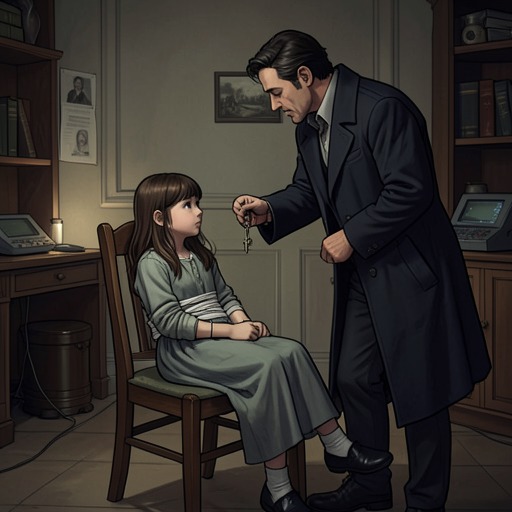
Catherine Linton first encounters Hareton Earnshaw when she is a young girl, having wandered to Wuthering Heights on an expedition to Penistone Crags. Ellen Dean, who has followed her, finds her "stray lamb" seated on the hearth, rocking herself in a little chair that had been her mother's when a child, laughing and chattering in the best spirits imaginable to Hareton—now a great, strong lad of eighteen—who stares at her with considerable curiosity and astonishment, comprehending precious little of the fluent succession of remarks and questions which her tongue never ceases pouring forth. The contrast between the two is immediately stark: Catherine is a polished, educated young lady of the Grange, while Hareton is a rough, unlettered farmhand, dressed in garments befitting his daily occupations of working on the farm and lounging among the moors after rabbits and game.
Catherine's reaction to her cousin is one of scorn and horror. When a servant suggests that Hareton is her cousin, she cries out with a scornful laugh, "He my cousin!" and weeps outright, upset at the bare notion of relationship with such a clown. She insists, "He's not—he's not my cousin, Ellen!" and flings herself into Ellen's arms for refuge from the idea. Hareton, recovering from his disgust at being taken for a servant, seems moved by her distress and, having fetched the pony round to the door, takes a fine crooked-legged terrier whelp from the kennel and puts it into her hand, bidding her whist! for he meant nought. But Catherine, pausing in her lamentations, surveys him with a glance of awe and horror, then bursts forth anew, unable to accept his gesture of goodwill.
The Degradation of Hareton and the Seeds of Change
Hareton's condition at this time is the direct result of Heathcliff's systematic degradation. Ellen Dean observes that Heathcliff had not treated him physically ill, thanks to his fearless nature, which offered no temptation to that course of oppression; he had none of the timid susceptibility that would have given zest to ill-treatment. Instead, Heathcliff appeared to have bent his malevolence on making him a brute: Hareton was never taught to read or write, never rebuked for any bad habit which did not annoy his keeper, never led a single step towards virtue, or guarded by a single precept against vice. Joseph contributed much to his deterioration, by a narrow-minded partiality which prompted him to flatter and pet him, as a boy, because he was the head of the old family. Joseph had instilled into him a pride of name, and of his lineage, and would, had he dared, have fostered hate between him and the present owner of the Heights, but his dread of that owner amounted to superstition.
Ellen Dean, however, detects in Hareton's physiognomy a mind owning better qualities than his father ever possessed—good things lost amid a wilderness of weeds, to be sure, whose rankness far over-topped their neglected growth, yet, notwithstanding, evidence of a wealthy soil, that might yield luxuriant crops under other and favourable circumstances. This observation foreshadows the transformation that Catherine's influence will eventually bring about. The legal and economic circumstances of Hareton's degradation are also significant: his father had mortgaged every yard of land he owned for cash to supply his mania for gaming, and Heathcliff was the mortgagee. In that manner, Hareton, who should now be the first gentleman in the neighbourhood, was reduced to a state of complete dependence on his father's inveterate enemy, living in his own house as a servant, deprived of the advantage of wages, quite unable to right himself because of his friendlessness and his ignorance that he has been wronged.
Catherine's Taunting and the Easter Monday Revelation
After Catherine is imprisoned at Wuthering Heights following her forced marriage to Linton Heathcliff, her relationship with Hareton takes on a new, more intimate and conflicted character. She is confined to the narrow bounds of the garden as spring draws on, and she complains of loneliness, preferring quarrelling with Joseph in the kitchen to sitting at peace in her solitude. Hareton is often obliged to seek the kitchen also, when the master wants to have the house to himself, and though in the beginning she either leaves it at his approach or quietly joins in Ellen's occupations, shunning remarking or addressing him—and though he is always as sullen and silent as possible—after a while, she changes her behaviour and becomes incapable of letting him alone, talking at him, commenting on his stupidity and idleness, expressing her wonder how he could endure the life he lived—how he could sit a whole evening staring into the fire and dozing.
She once observes to Ellen, "He's just like a dog, is he not, Ellen? or a cart-horse? He does his work, eats his food, and sleeps eternally! What a blank, dreary mind he must have! Do you ever dream, Hareton? And, if you do, what is it about? But you can't speak to me!" Hareton, however, will neither open his mouth nor look again, enduring her taunts in sullen silence. The turning point comes on Easter Monday, when Joseph goes to Gimmerton fair with some cattle. Ellen is busy getting up linen in the kitchen, Earnshaw sits morose as usual at the chimney corner, and Catherine is beguiling an idle hour with drawing pictures on the window-panes, varying her amusement by smothered bursts of songs and whispered ejaculations and quick glances of annoyance and impatience in the direction of her cousin, who steadfastly smokes and looks into the grate. At a notice that Ellen can do with her no longer intercepting her light, she removes to the hearthstone, and presently Ellen hears her begin: "I've found out, Hareton, that I want—that I'm glad—that I should like you to be my cousin now, if you had not grown so cross to me, and so rough." Hareton returns no answer, and she continues, "Hareton, Hareton, Hareton! do you hear?"
The Kiss and the Gift of Books
Hareton's silence provokes Catherine to further taunts, and he finally responds with anger, accusing her of being a damned liar and reminding her that he has taken her part a hundred times, even when she sneered at and despised him. He threatens to leave the kitchen if she continues to plague him. Catherine, drying her eyes, responds, "I didn't know you took my part, and I was miserable and bitter at everybody; but now I thank you, and beg you to forgive me: what can I do besides?" She returns to the hearth and frankly extends her hand. Hareton blackens and scowls like a thunder-cloud, keeping his fists resolutely clenched and his gaze fixed on the ground. Catherine, by instinct, must have divined it was obdurate perversity, and not dislike, that prompted this dogged conduct; for, after remaining an instant undecided, she stoops and impresses on his cheek a gentle kiss. Drawing back, she takes her former station by the window, quite demurely, and when Ellen shakes her head reprovingly, she blushes and whispers, "Well! what should I have done, Ellen? He wouldn't shake hands, and he wouldn't look: I must show him some way that I like him—that I want to be friends."
Whether the kiss convinced Hareton, Ellen cannot tell: he is very careful, for some minutes, that his face should not be seen, and when he does raise it, he is sadly puzzled where to turn his eyes. Catherine then employs herself in wrapping a handsome book neatly in white paper, and having tied it with a bit of ribbon and addressed it to "Mr. Hareton Earnshaw," she desires Ellen to be her ambassadress and convey the present to its destined recipient. This gift of a book marks the beginning of a new phase in their relationship, as Catherine takes on the role of teacher and Hareton becomes her willing pupil.
The Growth of Intimacy and the Union of Two Hearts
The intimacy thus commenced grows rapidly, though it encounters temporary interruptions. Earnshaw is not to be civilized with a wish, and Catherine is no philosopher and no paragon of patience; but both their minds tending to the same point—one loving and desiring to esteem, and the other loving and desiring to be esteemed—they contrive in the end to reach it. Ellen Dean, who has watched over both of them, expresses her deep satisfaction: "You see, Mr. Lockwood, it was easy enough to win Mrs. Heathcliff's heart. But now, I'm glad you did not try. The crown of all my wishes will be the union of those two. I shall envy no one on their wedding day: there won't be a happier woman than myself in England!"
Their growing bond is tested when Hareton sternly checks his cousin on her offering a revelation of her father-in-law's conduct to his father. He says he wouldn't suffer a word to be uttered in his disparagement: if he were the devil, it didn't signify; he would stand by him; and he'd rather she would abuse himself, as she used to, than begin on Mr. Heathcliff. Catherine is waxing cross at this, but he finds means to make her hold her tongue by asking how she would like him to speak ill of her father. Then she comprehends that Earnshaw takes the master's reputation home to himself, and is attached by ties stronger than reason could break—chains, forged by habit, which it would be cruel to attempt to loosen. She shows a good heart, thenceforth, in avoiding both complaints and expressions of antipathy concerning Heathcliff, and confesses to Ellen her sorrow that she had endeavoured to raise a bad spirit between him and Hareton.
When this slight disagreement is over, they are friends again, and as busy as possible in their several occupations of pupil and teacher. Ellen comes in to sit with them after she has done her work, and feels so soothed and comforted to watch them that she does not notice how time gets on. They both appear in a measure her children: she had long been proud of one, and now she is sure the other would be a source of equal satisfaction. Hareton's honest, warm, and intelligent nature shakes off rapidly the clouds of ignorance and degradation in which it had been bred, and Catherine's sincere commendations act as a spur to his industry. His brightening mind brightens his features, and adds spirit and nobility to their aspect. Ellen can hardly fancy it the same individual she had beheld on the day she discovered her little lady at Wuthering Heights, after her expedition to the Crags.
The Final Union and the Promise of the Grange
One evening, as they labour together, dusk draws on, and with it returns the master. Heathcliff comes upon them quite unexpectedly, entering by the front way, and has a full view of the whole three ere they can raise their heads to glance at him. The red fire-light glows on their two bonny heads and reveals their faces animated with the eager interest of children; for, though he is twenty-three and she eighteen, each has so much of novelty to feel and learn that neither experiences nor evinces the sentiments of sober disenchanted maturity. They lift their eyes together to encounter Mr. Heathcliff, and Ellen notes that their eyes are precisely similar, and they are those of Catherine Earnshaw. The present Catherine has no other likeness to her, except a breadth of forehead and a certain arch of the nostril that makes her appear rather haughty, whether she will or not. With Hareton the resemblance is carried farther: it is singular at all times, then it was particularly striking, because his senses were alert and his mental faculties wakened to unwonted activity. Ellen supposes this resemblance disarmed Mr. Heathcliff: he walks to the hearth in evident agitation, but it quickly subsides as he looks at the young man, or, she should say, altered its character; for it was there yet. He takes the book from his hand and glances at the open page, then returns it without any observation, merely signing to them to continue their occupation.
The romance reaches its culmination when Ellen Dean reveals to Mr. Lockwood that Hareton and Catherine are to be married on New Year's Day, and that they will then move to Thrushcross Grange. Joseph will take care of the house at Wuthering Heights, and perhaps a lad to keep him company; they will live in the kitchen, and the rest will be shut up. This final arrangement signifies the complete restoration of order: the rightful heir of Wuthering Heights, united with the heiress of Thrushcross Grange, will leave the grim house of his degradation behind and begin a new life at the Grange, while the old house is left to the care of the ancient servant. The union of Hareton and Catherine thus represents the healing of the two families and the promise of a future free from the revenge and suffering that had consumed the previous generation.